| The Habitat Model – Why it is Different | | Print | |
|
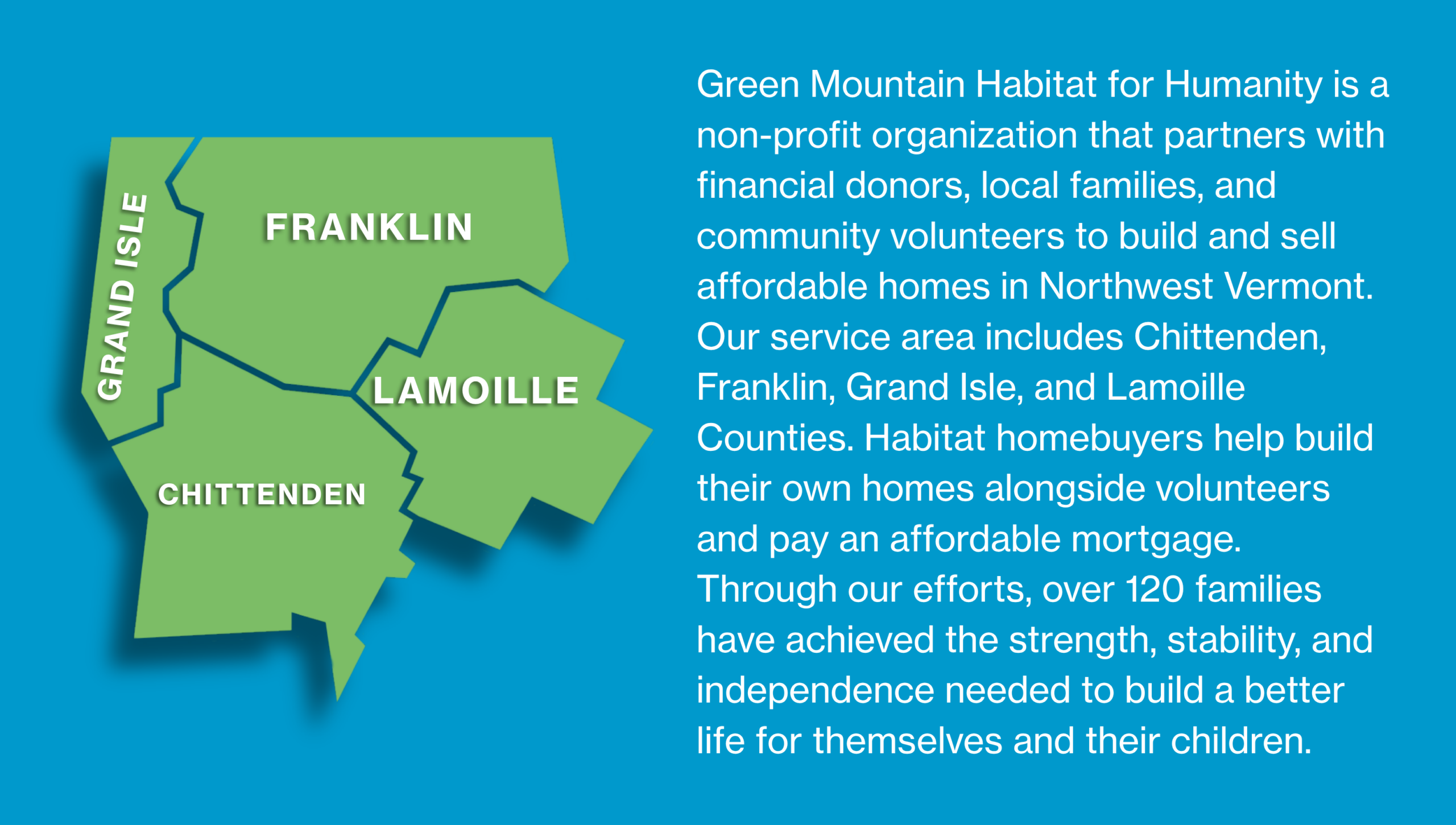
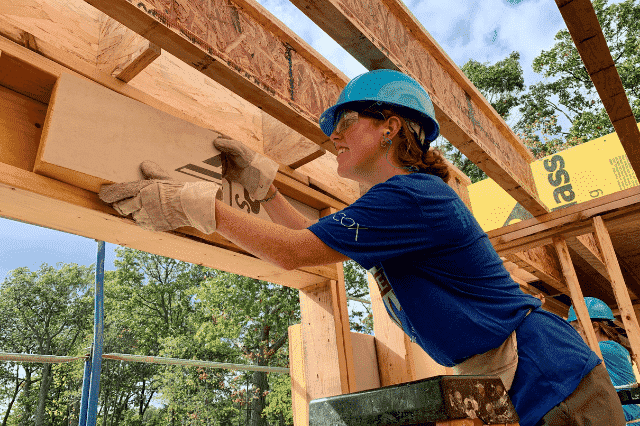
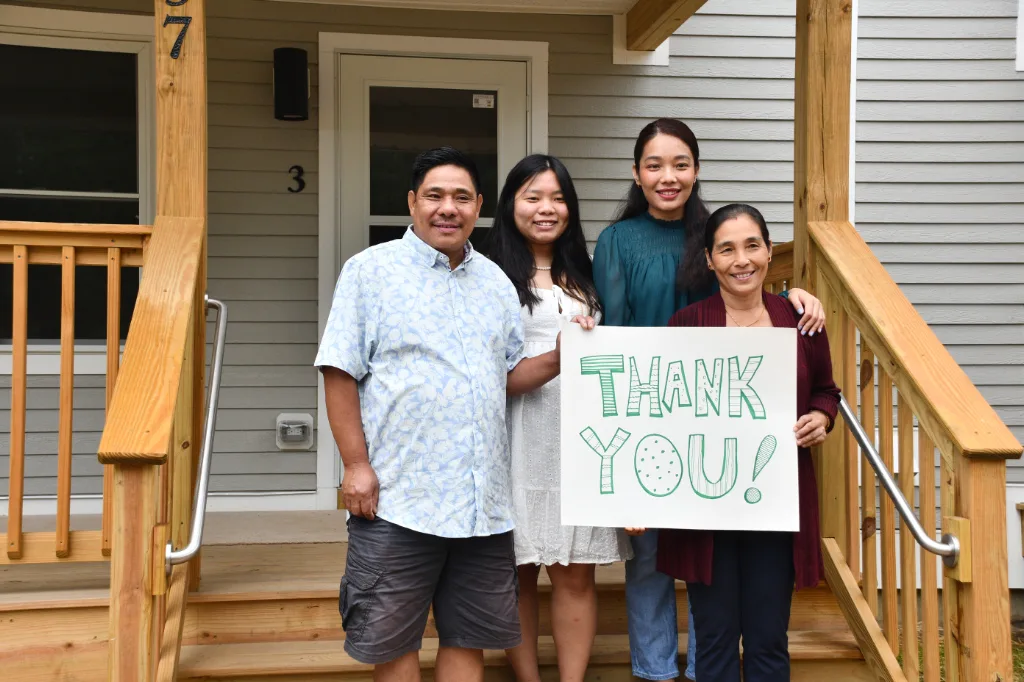
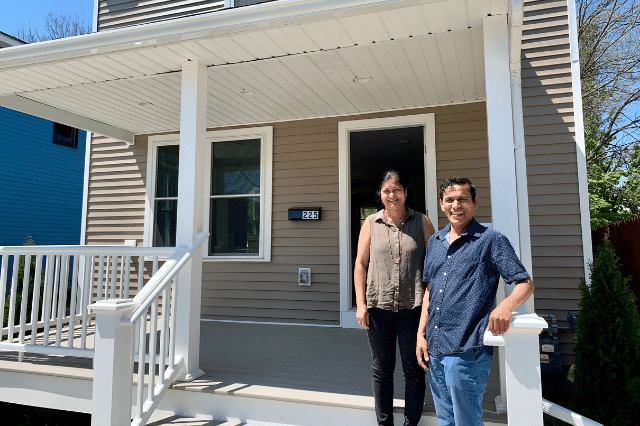
Through the Habitat model, a low cost, energy efficient home is built and sold to an eligible family for cost, with no profit or interest to Habitat. How do they do it? Through a collaborative effort of a group of volunteers who are involved in all phases of Habitat board membership, specific committees such as site and family selection, and volunteer recruitment and organization; hands-on construction; sweat equity by the family; donated materials; fundraising efforts, and financial partnerships with other non-profits such as land trusts or housing boards. The 25-year mortgage payments for the house are then reinvested to build yet more affordable homes, over and over again. “When someone makes a donation we use that money to buy a front door,” say David Mullin, Green Mountain Habitat for Humanity’s (GMHfH) executive director, and only full-time paid staff. “That is a unique business model in the business world. When you build a house in the private sector more than half the cost is labor. Habitat is able to get labor through volunteerism.” GMHfH, started in 1984, is a local affiliate of the larger Habitat International organization, and covers Chittenden County. GMHfH comprises chapters in Lamoille and Franklin counties, as well as strong involvement from St. Michael’s College and the University of Vermont. There are also seven other Habitat affiliates throughout Vermont. While every local and regional chapter must follow a general guidebook for organization under Habitat International, further refinement of the process occurs under the particular mix and skill sets of volunteer board members in any given term. More often than not, board members are retirees, with time, energy and experience to devote several hours a week of volunteer time. The Habitat model was conceived in the late 60’s by Georgians Millard Fuller and Clarence Jordan, and officially started in 1976. Ex-President Jimmy Carter and wife Rosalynn have been highly visible volunteers of Habitat, and together wrote a book about their experiences. It is an ecumenical Christian, non-profit organization and open to volunteers and families of all faiths. “While many people are intimidated to volunteer because they have never built a home, the majority of volunteers don’t have construction experience,” says Mullin, “And that is one of the fun aspects of Habitat. Young people up through retired folks make up the crews, and all enjoy the camaraderie that occurs. Often up to 400 volunteers are engaged in the building of one house. Some come for one day, some for the duration of the project. Businesses will send groups of employees, which in turn strengthens their organization through team-building. We often have pushes for women crews, in fact there is one this summer and it is still open for volunteers. Our women crews highlight the power women have in bringing children out of poverty housing.” Each home has a volunteer building crew led by a team leader, a person with solid construction experience. Team leaders are often local builders who also run full-time businesses of their own. In addition, there are volunteer skilled construction supervisors for smaller groups of 3-4 people, who walk them through what needs to be done. The volunteers are managed by a volunteer coordinator, who sees to it that they are kept busy and fed during their stint. The family is kept involved through sweat equity, a concept that by design encourages a sense of pride and responsibility in their home, as well as community as the volunteers and family get to know each other. Sweat equity can be met through hands-on building or behind the scenes office work, and is sometimes met by a relative of the family to live in the house, if the family must work full-time; or the family can choose to pay their sweat equity hours. A family support person, a volunteer from Habitat, helps the family to manage their hours, and offers education in financial budgeting – both of house maintenance costs and mortgage. Another unique aspect of the Habitat model is a covenant that gives Habitat the first right to purchase it back from the family should they choose to sell it. The family is then is entitled to all the mortgage plus 25% appreciation. This gives them the ability to further build a nest egg. And, there is a clause that allows the home to stay in the family through generations. Mullin concludes, “There is an ever increasing need by people in need of affordable housing, and that need continues to grow with the ever escalating cost of housing. Habitat addresses that need in a way that benefits the whole community of people involved.” |