| History of the Chapter: Part IV | | Print | |
|
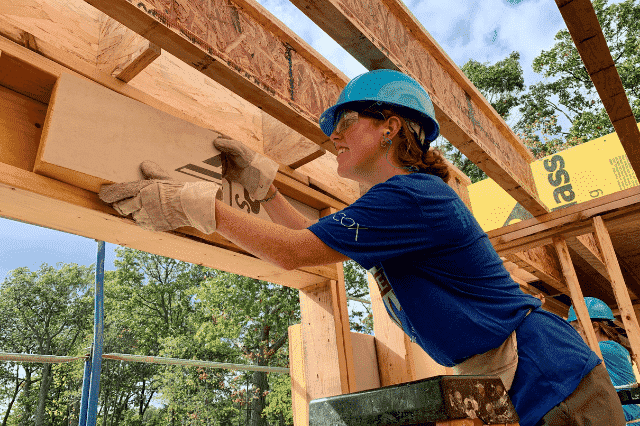
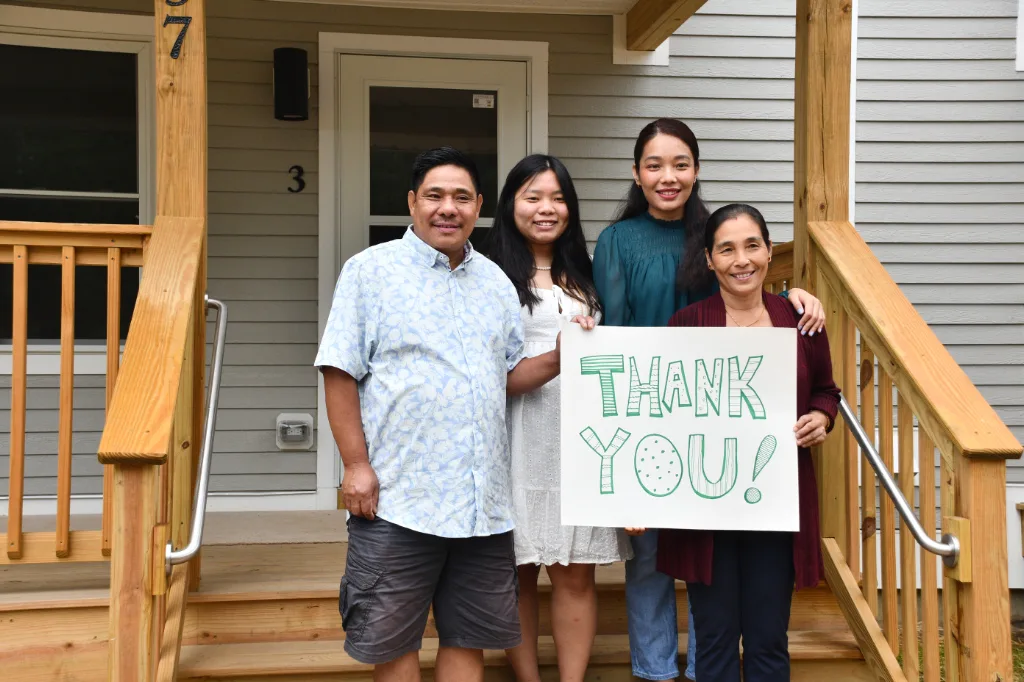
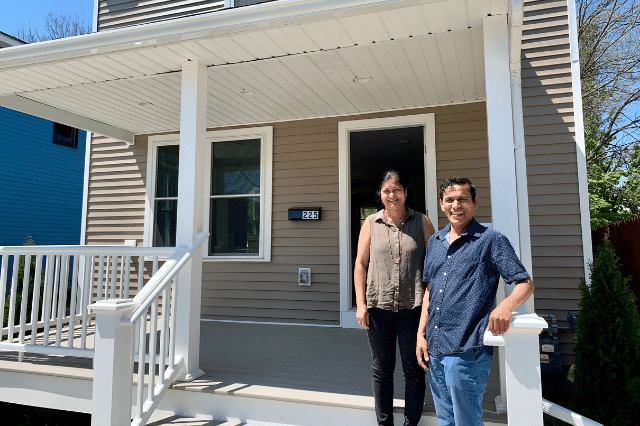
I remember the joy of working with our founding Board to make the initial connections with Americus at the Georgia headquarters. With the help of local lawyer Norman Smith who was on our Board, we drafted the bylaws and brought them through the full process. There was the planning of what we call sweat equity. This concept is so appealing because we are not building the house for someone, but with someone. We designed the recording systems to document hours, which allow you to get to know the upcoming families. For example, if you had 7 families on selection they would all be working diligently on the current house we’d be building. In the first founding years we came up with a formula of 500 hours before anyone could be considered as a candidate for selection. This would show us their intention to be part of the building process. Then there was our very first house dedication. We brought the family together in the living room of their new home along with their children, family, friends and neighbors. This was then, and always has been, an extremely special time. And I especially enjoyed working with local non profits. I have great memories of public speaking and fundraising.” McQuillen describes how Habitat has affected her family, in particular her children. “After we got going here in Vermont, I took my children to the Habitat in Guatemala. It has informed both their majors in college and as a result of going to Latin America, both are Spanish speakers and have travelled throughout world.” John Owen first learned about Habitat when he worked at Kodak in Rochester, NY. He knew it was a place he wanted to focus on after retirement. He worked in a Habitat office in Rochester, and when he retired and moved to Chittenden County in 1996, got involved immediately with the site selection committee at GMHFH. Owen’s years with Habitat ended in 2005 after serving a Board President term. During his busiest times, he would work up to 20 hours a week at Habitat, and attend monthly meetings. “When I first joined GMHFH, it was struggling. There were not a lot of volunteers. Charlie Magill as Board President then really turned it around. We also saw the need for paid help (hence the hiring of David Mullin, current Executive Director), and I was part of that search process. Probably the biggest and longest challenge we had was with a parcel of land in the north end of Burlington. Our idea was to take 30 acres, conserve woods and wetland, and build a number of houses on 3 acres to create a neighborhood. In that process we dealt with several protests from conservation groups and neighbors who didn’t trust what we were doing, and the neighbors eventually took us to court. The end result was that the city council ruled in our favor, and today that area is a small thriving neighborhood, with protected lands surrounding it. What I liked best about working at Habitat is simply the people; they are all a group of great, dedicated people who will do anything for you. It’s a real community. I went to the last annual meeting, and there were many new faces, and a lot of old faces. It was a wonderful feeling to be part of that.” Julie Pierson is a member of the Family Selection Committee and a past Board member for Habitat. She was introduced to the organization through a childhood friend. ‘The mission statement says it all,” says Pierson. “Our goal is to eliminate poverty housing all around the world. In this economy Habitat has a more prominent role than it already had. Although this is sometimes a source of stress and anxiety, as it isn’t always clear which family will rise to the top for the Selection Committee. Sometimes, it’s just a slight edge. It’s a mostly objective process based on three criteria; ability to pay, living in substandard housing, and ability to provide sweat equity. These criteria can make several families qualify. What can sometimes be more subjective is the substandard housing piece. We always try to pick the neediest family in the selection pool. Then, it is also the most wonderful moment when the committee finally decides which family rises to the top. As there are three of us on the Family Selection Committee, the person who has been that family’s liaison gets to make the phone call to tell them they have been chosen. I once made a phone call when my family was chosen, and spoke with the father. I said, ‘I wanted to tell you the Board has met and picked your family.’ There was a long silence, followed by choking sounds. I asked him if he was OK. He said, ‘Yeah, I’m OK.’ He had been crying.” |