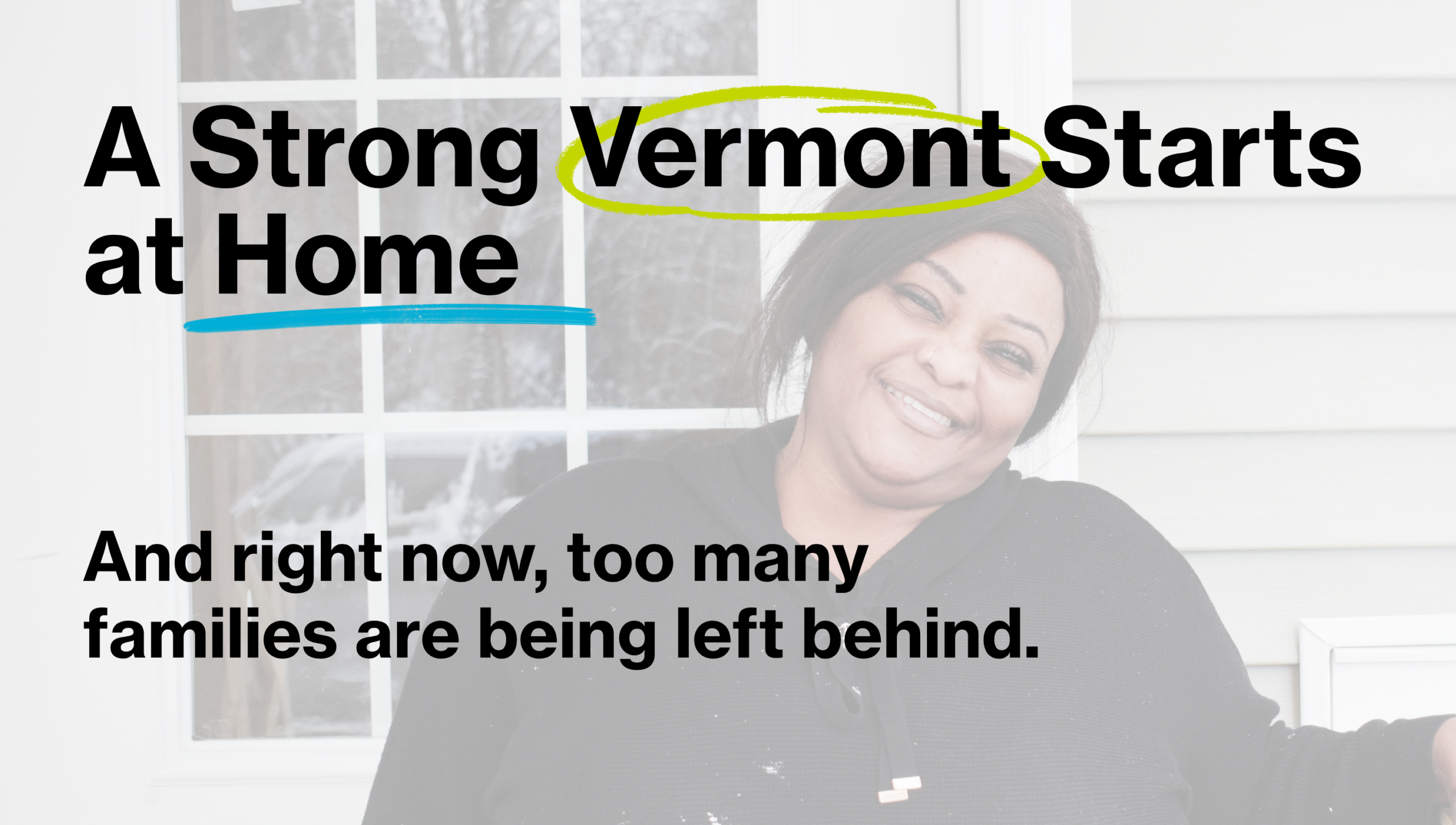
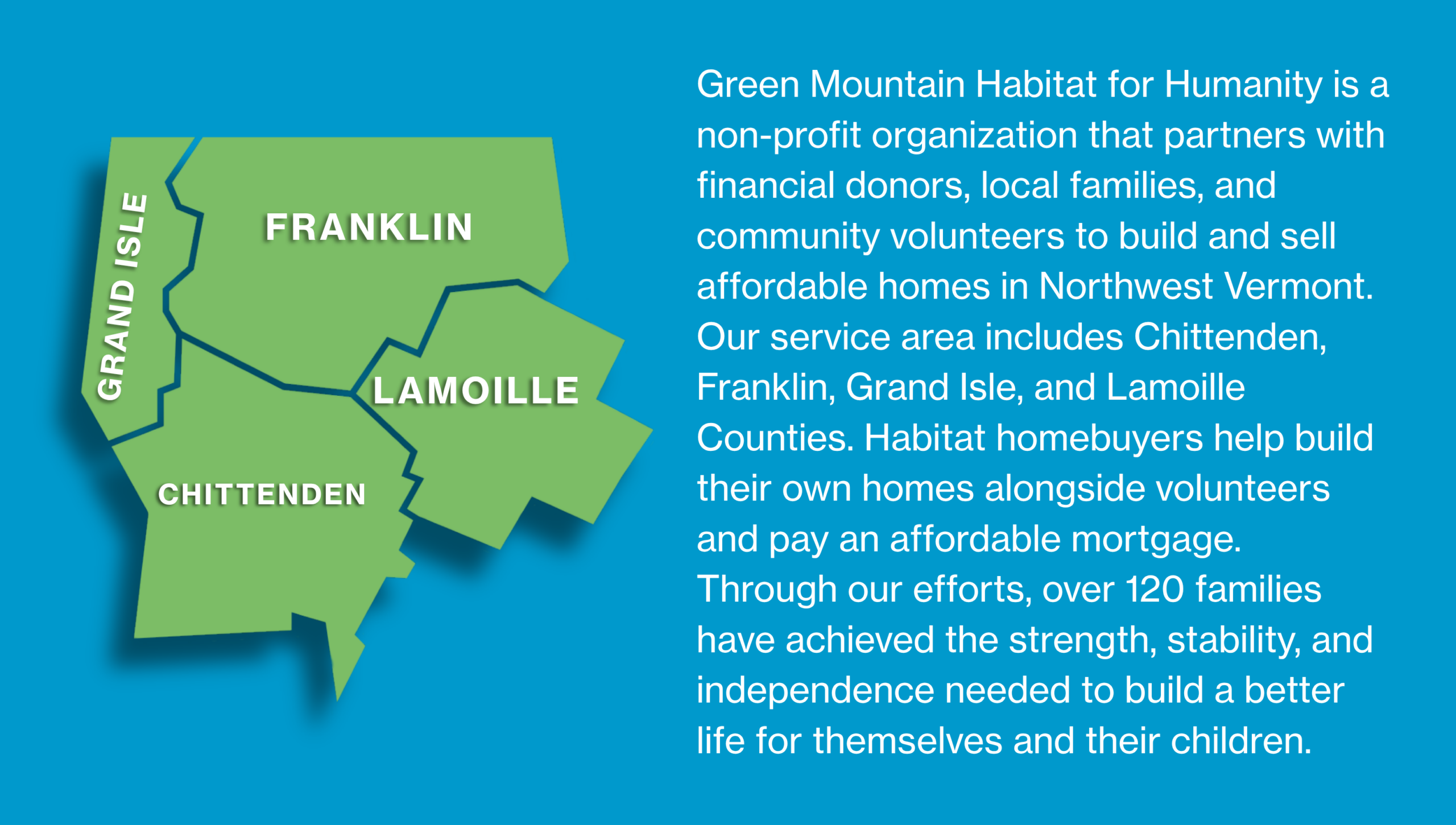
Building homes and changing lives in Northwest Vermont.
Donate
Make a Gift
Donate a Vehicle
Volunteer
Habitat ReStores
About Us
Williston ReStore
Milton ReStore
Swanton ReStore
Shop the ReStore
Donate Your Goods
Business Donations
Homeownership
Apply For a Home
Current Projects
Past Projects
Why Home Matters
News and Events
Habitat Happenings
Upcoming Events
Media Coverage
About
Our Mission
Our Team
Board of Directors
Community Partners
Employment
Contact Us
FAQ
Donate
Make a Gift
Donate a Vehicle
Volunteer
Habitat ReStores
About Us
Williston ReStore
Milton ReStore
Swanton ReStore
Shop the ReStore
Donate Your Goods
Business Donations
Homeownership
Apply For a Home
Current Projects
Past Projects
Why Home Matters
News and Events
Habitat Happenings
Upcoming Events
Media Coverage
About
Our Mission
Our Team
Board of Directors
Community Partners
Employment
Contact Us
FAQ
*Update on the Williston ReStore
Read More
Building homes, changing lives in Northwest Vermont.
Mission & Vision
We believe in a world where everyone, no matter who we are or where we come from, deserves a decent place to live.
Our Mission
Make a Donation
Your support is needed now more than ever. Help local families and children thrive by making a charitable donation.
Donate Today
Volunteer With Us
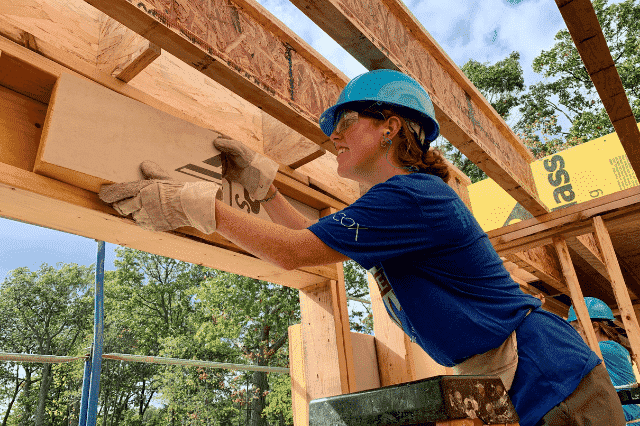
Volunteers are at the heart of our organization. Sign up to volunteer on a build site or a Habitat ReStore today.
Volunteer Locally
Why Home Matters
A decent home, brighter futures — this is why home matters and why we’re committed to changing lives.
Why Home Matters
Apply for a Home
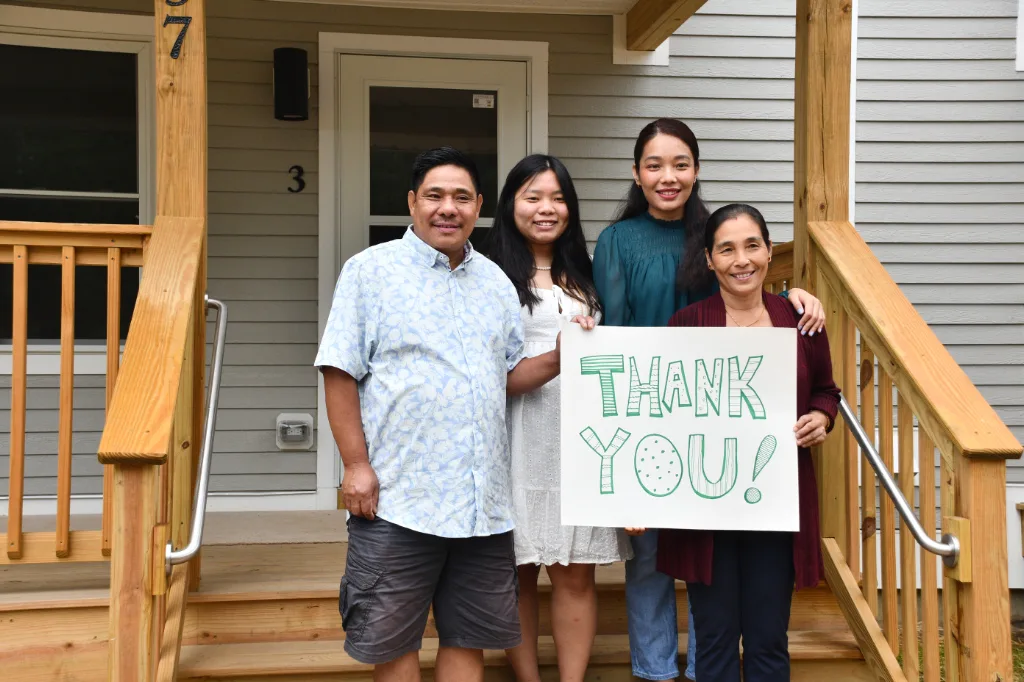
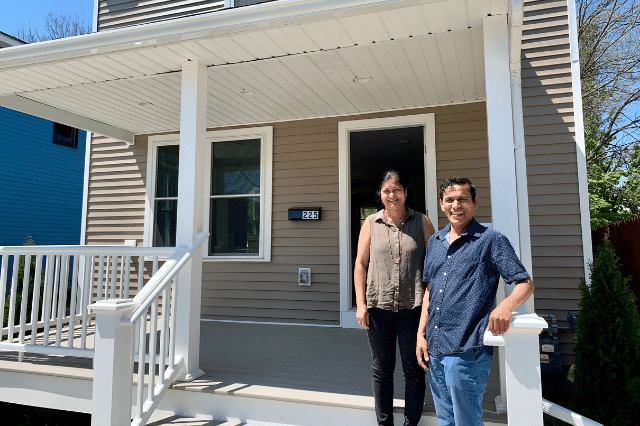
Habitat partner families need better housing, can pay an affordable mortgage, and are willing to partner with us.
Apply for a Home
Habitat ReStores
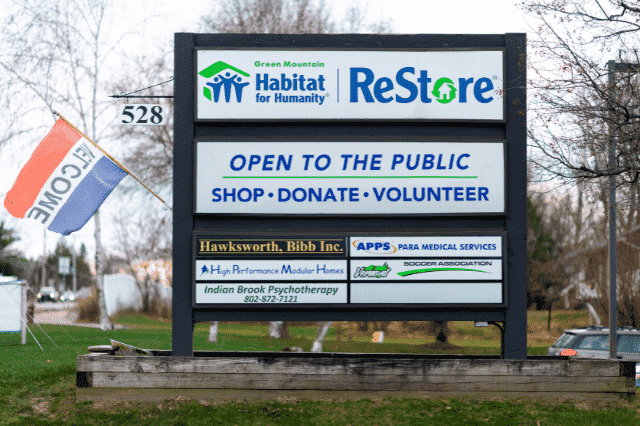
Shop, donate, and volunteer at our Habitat ReStores. You’ll help build affordable homes in our community!
Habitat ReStores
Stay up-to-date on Green Mountain Habitat for Humanity news, volunteer opportunities and events. Subscribe to our newsletter!
Subscribe
Donation Pickup
© Green Mountain Habitat for Humanity